Reimagining a Historic Civic Landscape

Queen’s Gardens is one of Hull’s most significant public spaces, occupying the footprint of the former Queen’s Dock at the heart of the city. Originally designed by Sir Frederick Gibberd in the 1950s, the gardens have undergone a major transformation to create a more accessible, resilient and event-ready civic destination while celebrating the site’s rich maritime heritage.
Delivered by Hull City Council, the regeneration forms part of the wider Hull Maritime programme and creates an important cultural corridor linking the Hull Maritime Museum with the North End Shipyard. The project balances contemporary public realm design with the conservation of historic features, creating a welcoming environment for residents, visitors and major city events.
Maritime Storytelling Through Material Selection

A defining aspect of Queen’s Gardens is the integration of bespoke artworks and interpretation features that celebrate Hull’s rich maritime heritage through stone, metal and landscape. Working closely with the Client Hull City Council, Southern Green Landscape Architects (in collaboration with Conservation Architects’ Purcell), CR Reynolds Contractors and artist Dr Katayoun Dowlatshahi, Hardscape supplied a coordinated palette of natural stone materials that provided the canvas for a series of distinctive public realm interventions woven throughout the gardens.
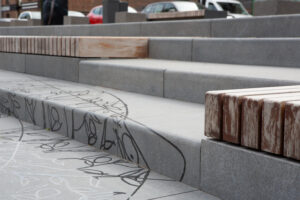
Among the most striking features are the amphitheatre-style seating and step units overlooking the gardens. Manufactured by Hardscape Surfaces in Crystal Black granite, these bespoke sandblasted-finish steps incorporate detailed polished scrimshaw-inspired artwork referencing Hull’s historic connections to the British whaling industry. Using specialist stencil production and sandblast-etching techniques, intricate illustrations were engraved directly into the granite, drawing inspiration from the traditional carvings created by sailors during long Arctic voyages.
At the centre of the scheme, a large-scale navigation artwork has been integrated directly into the paving using a combination of Crystal Black granite, Kilkenny Irish Blue limestone, Egerton Holcombe-blend sandstone, brass and stainless-steel inlays together with Kobra Grey granite cube seating. Inspired by historic navigation charts and maritime routes departing from Queen’s Dock, the installation depicts the journeys of Hull’s vessels and the Arctic wildlife encountered along the way. Carefully manufactured and assembled using specialist engraving and finishing techniques, the artwork creates a powerful focal point that combines storytelling, craftsmanship and material excellence.
Together, these bespoke features help transform Queen’s Gardens into more than a public space; they create an immersive landscape that celebrates Hull’s maritime identity while connecting visitors with the city’s history through carefully crafted and enduring materials.
Engineering a Landscape for the Future
One of the project’s greatest challenges lay beneath the surface. Queen’s Gardens occupies an infilled wet dock dating back to the 1930s, and extensive ground investigations revealed significant structural challenges including unstable ground conditions and deteriorating historic foundations.
The public realm design required robust engineering solutions capable of supporting substantial areas of paving, retaining walls and public infrastructure. New boundary walls along the northern and eastern edges of the gardens were rebuilt, replacing failing structures while ensuring long-term stability for future generations.
The scheme also incorporates sustainable drainage principles through rain gardens, refurbished ponds and integrated water management features that help alleviate flood risk while enhancing biodiversity and climate resilience.
Celebrating Hull’s Maritime Identity
Throughout the gardens, materials and landscape elements have been carefully used to reinforce Hull’s maritime story. New artworks, interpretation features and wayfinding elements create a narrative journey through the space, connecting visitors with the city’s dockside history, whaling heritage and maritime culture.
The landscape provides the setting for a series of artist-led interventions, restored heritage artworks and bespoke stone features that collectively celebrate Hull’s relationship with the sea while creating a contemporary civic destination.
Creating a Legacy Landscape

Queen’s Gardens demonstrates how thoughtful material selection, collaborative design and high-quality public realm delivery can transform a historic urban space. The completed scheme creates a vibrant and accessible civic landscape that supports events, community activity and everyday use while honouring Hull’s unique maritime heritage.
Through a combination of durable natural materials, sustainable infrastructure and carefully integrated cultural storytelling, the gardens have been reimagined for future generations.